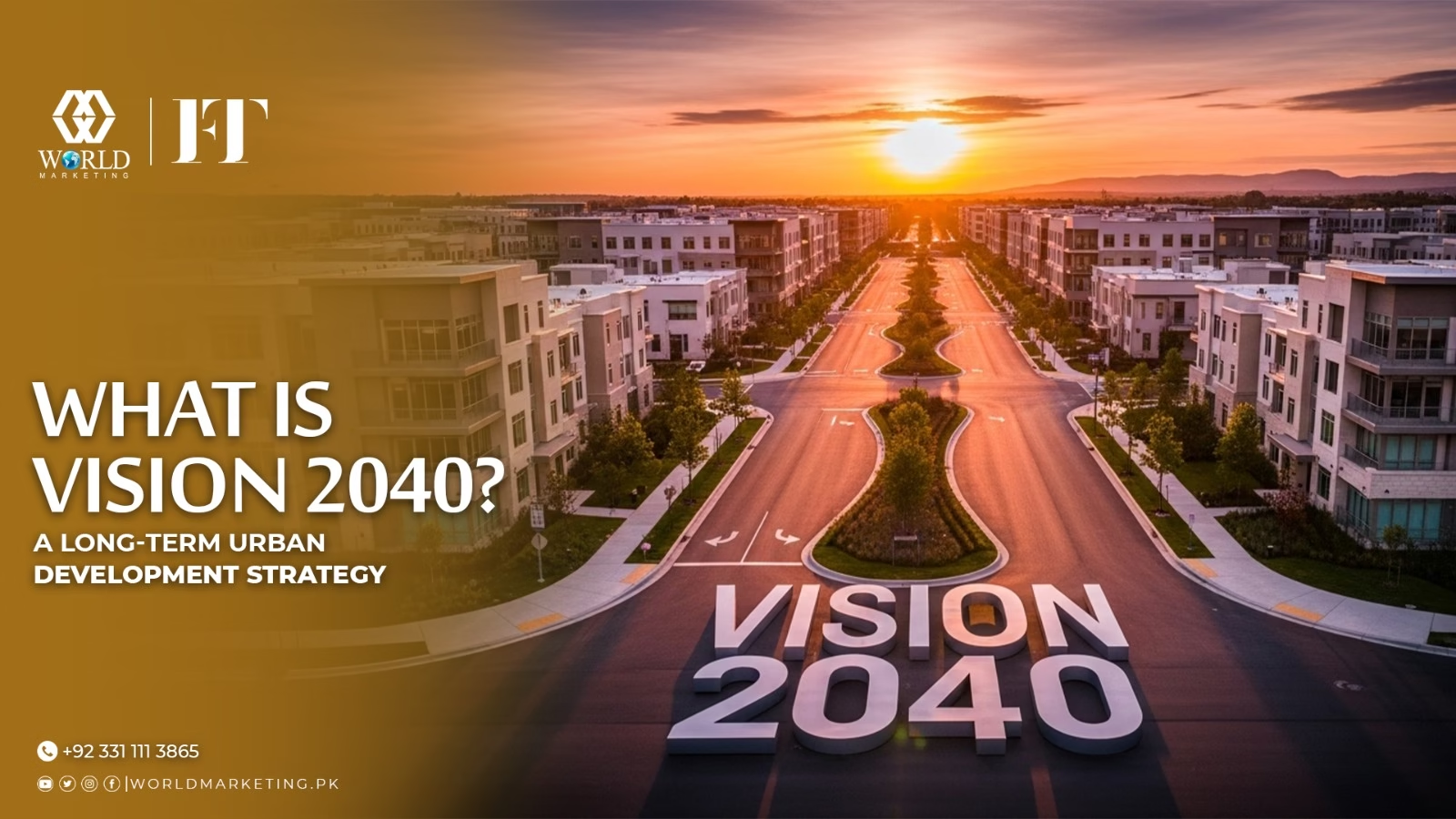
Picture this: it’s 2040. You’re driving through Islamabad, but something feels different.
The roads aren’t choked with traffic. There are actual trees lining the streets, not just concrete barriers. Your kids’ school is a ten-minute walk from home. The hospital isn’t across the city. The park isn’t just a patch of dirt with a broken swing.
It sounds almost fictional, doesn’t it?But what if I told you someone is actually planning for this? Not in vague corporate speak, but with timelines, locations, and a strategy that stretches 20 years into the future?
That’s Vision 2040 A Long Term Urban Development Strategy. And before you roll your eyes at another “revolutionary” real estate promise, let me ask you something: when was the last time a developer in Pakistan thought beyond the next quarterly sale?
Let’s Start With the Obvious Question: What Actually Is Vision 2040?
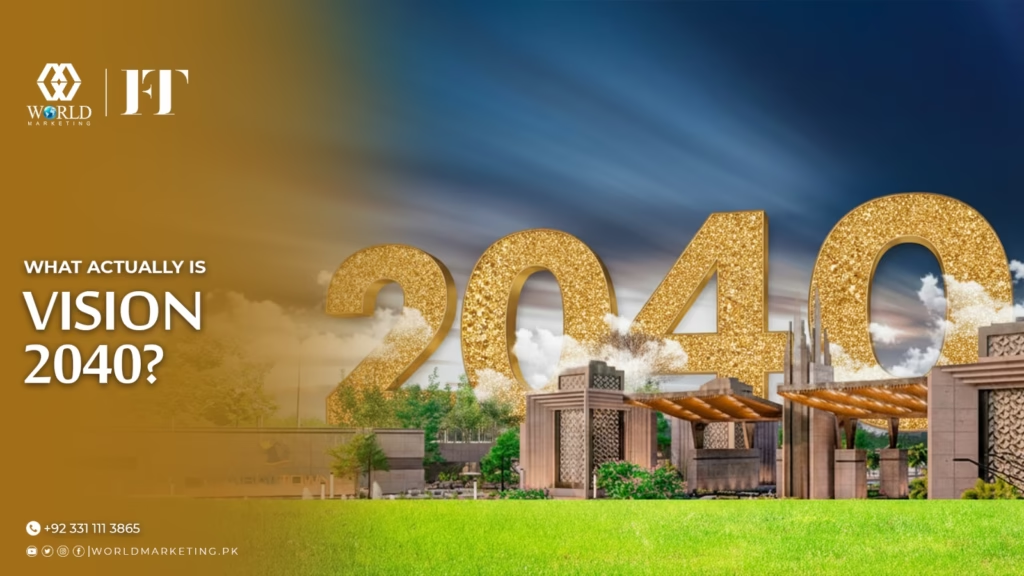
If you Google “Vision 2040,” you’ll probably find government plans, corporate roadmaps, sustainability goals, everyone seems to have a “vision” these days.
But here’s what makes this one different.
Vision 2040 is Faisal Town Group‘s 20-year urban development strategy focused on building complete, self-sustaining communities around Islamabad and Rawalpindi. Not just housing schemes. Not just plot files. Actual places where people can live, work, study, and raise families without wanting to escape.
And here’s the kicker, Faisal Town Group used to be called Zedem International. They rebranded right when they announced this vision. Why?
Because you can’t plan for 2040 with a 2015 mindset.
Vision 2024: Why 20 Years Strategy? Why Not 5 or 10?
Good question. Most developers work in cycles of 3-5 years. Launch, sell, deliver, repeat. It’s fast, it’s profitable, and it doesn’t require thinking too far ahead. So why would Faisal Town Group lock themselves into a 20-year strategy?
Maybe because the problems we’re facing don’t have quick fixes. Islamabad’s population is exploding. Rawalpindi is bursting at the seams. New housing societies are popping up faster than the infrastructure can support them.You can build a housing scheme in five years. But you can’t build a city that way. You can’t create proper schools, hospitals, transport systems, and green spaces on a short-term budget.
Vision 2040 isn’t about selling plots quickly. It’s about building something that actually lasts. And honestly? That takes time.
Urban Development : Problem Nobody Talks About
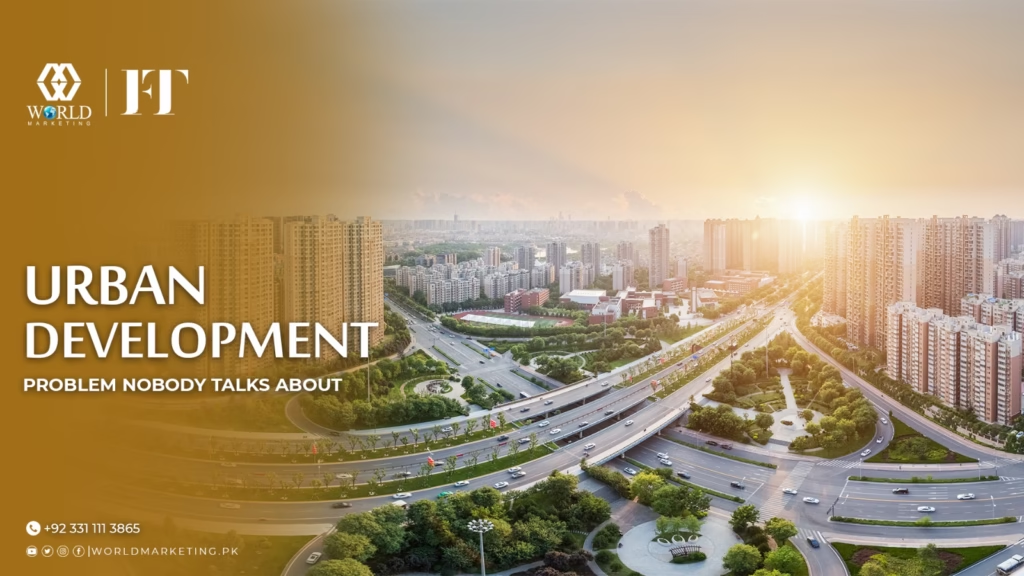
Here’s what I find interesting.
Everyone complains about Pakistani cities, the traffic, the pollution, the lack of planning. But then we keep investing in the same type of developments that caused these problems in the first place.
We buy plots in housing schemes with no schools. No hospitals. No grocery stores. Just plots, gates, and a promise that “development is coming soon.”Then we wonder why life feels so exhausting. So let me ask you this: what if the problem isn’t the cities themselves, but how we’ve been building them?
Vision 2040 seems to start from that exact question. Instead of asking “how many plots can we sell,” it asks “how should people actually live?”
Breaking Down the Strategy: What Does Vision 2040 Actually Include?
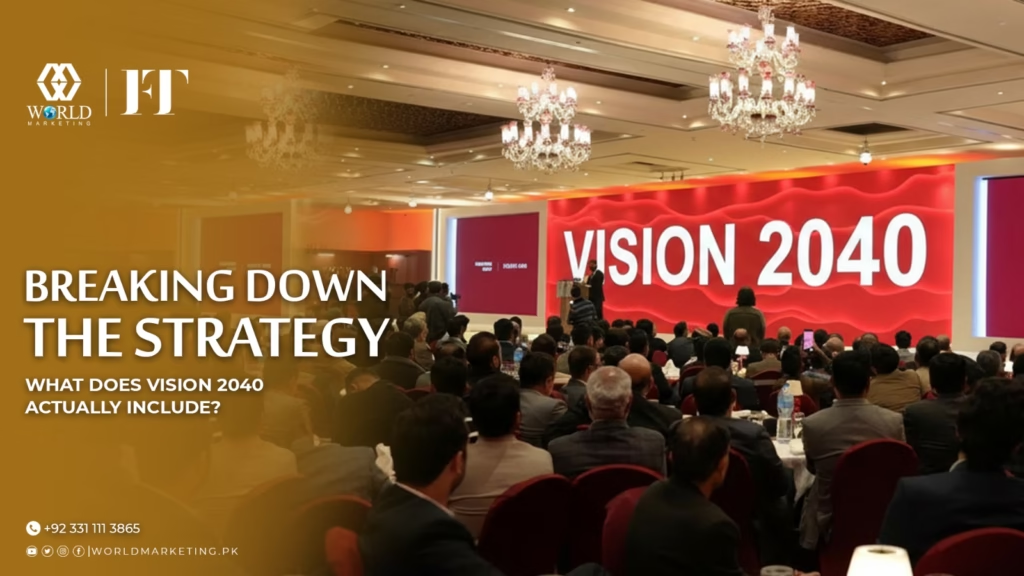
Okay, enough philosophy. What’s actually in this strategy? From what we can piece together, Vision 2040 focuses on five core pillars:
1. Integrated Community Planning
This means designing neighborhoods where everything you need is nearby. Schools, hospitals, shopping areas, parks, offices, all within a short distance.Think about your current routine. How much time do you waste traveling? What if you could walk to most places instead?
That’s the idea.
2. Sustainable Infrastructure
Here’s where it gets practical. Vision 2040 prioritizes proper road networks, reliable utilities (water, electricity, gas), efficient drainage systems, and waste management before people move in.Why? Because fixing these things later is nearly impossible. Ever seen a housing society try to install proper sewage after people are already living there? It’s chaos.
3. Green Spaces and Environmental Balance
This isn’t just about planting a few trees for the brochure. Vision 2040 includes planned green belts, parks, and open spaces that are protected from future commercial development.Will developers actually resist the temptation to build on every inch of land? That’s the test.
4. Strategic Location Selection
Faisal Town Group isn’t randomly buying land. Vision 2040 targets growth corridors around Islamabad and Rawalpindi, areas connected to major highways and future expansion zones.The question is: where will Islamabad grow next? Vision 2040 claims to have mapped it out.
5. Long-Term Investment Value
Instead of focusing on quick resale, the strategy emphasizes properties that appreciate steadily over decades. The target audience? Young professionals, families, and overseas Pakistanis looking for reliable, long-term investments.So if you’re 20 today and thinking about buying your first property, Vision 2040 is basically saying: “Invest now, live comfortably at 40.”
The Zedem to Faisal Town Group Shift: What Changed?
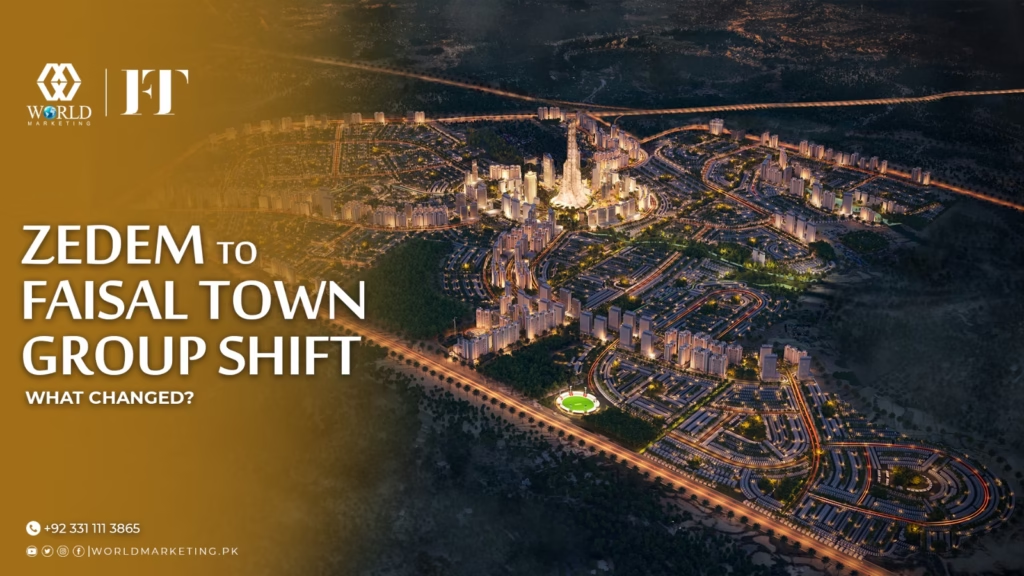
Let’s talk about the elephant in the room.
Zedem International was doing fine. They had completed projects, satisfied customers, and had a decent reputation. So why rebrand as Faisal Town Group exactly when announcing Vision 2040?Here’s my theory: the name change signals a strategic shift. Zedem International was a developer. Faisal Town Group is positioning itself as a long-term urban planner.
It’s like watching a construction company become a city architect.The new name carries weight, Faisal Town is already a recognized name in Pakistan’s real estate sector. By adopting it, the group is aligning itself with legacy, trust, and long-term thinking.
But names are easy to change. Strategy? That’s where things get real.
How Is Vision 2040 Different From Every Other “Master Plan”?
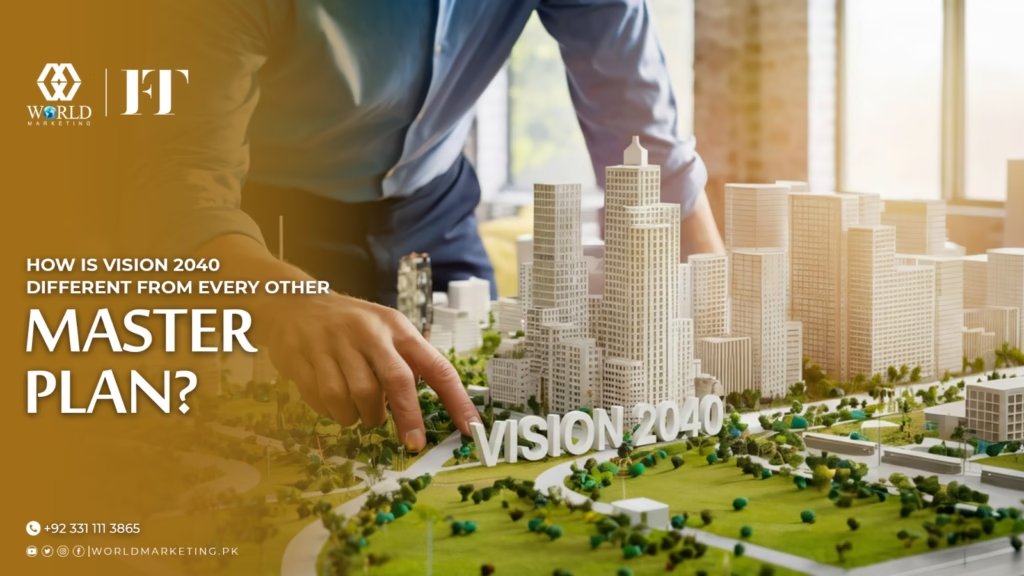
You’ve seen them before. Glossy brochures. CGI renderings of perfect communities. Promises of world-class facilities.And then? Half-finished projects, broken promises, investors left hanging.So what makes Vision 2040 different?Honestly, we don’t know yet. It’s too early to judge.
But here are some signs worth watching:
Transparency: Are they openly sharing development timelines and progress updates?
Delivery History: Has Faisal Town Group (formerly Zedem International) completed projects before?
Regulatory Approvals: Are their projects legally approved by relevant authorities like RDA, CDA, or LDA?
Infrastructure First: Are they building roads, utilities, and facilities before selling plots, or after?
If the answers lean positive, Vision 2040 might actually be different. If not? It’s just another marketing campaign.
Who Is Vision 2040 Actually For?
Let’s get specific. Who benefits from a 20-year urban development strategy?
Young Professionals in Their 20s and 30s
If you’re just starting your career, you’re not looking for quick flips. You want something that will grow with you, a place you can actually afford now that will be worth significantly more when you’re ready to settle down.Vision 2040 speaks directly to this. Buy today at early prices. Watch the area develop over the next decade. Move in when you’re ready.
Families Looking for Stability
Tired of moving every few years? Tired of schools being too far? Hospitals that you don’t trust? Vision 2040’s integrated community model is designed exactly for families who want everything nearby.
Overseas Pakistanis
If you’re working in Dubai, London, Toronto, or New York, investing in Pakistan feels risky. How do you know the project will actually complete? How do you verify anything from abroad?A 20-year strategy with a clear roadmap, regular updates, and a track record offers the kind of long-term reliability overseas investors desperately need.
First-Time Investors
New to real estate? Confused by all the hype and scams? Vision 2040’s focus on sustainable growth and long-term value is far safer than chasing speculative trends.
The Real Test: Can Faisal Town Group Actually Deliver?
Here’s the uncomfortable truth: vision is easy. Execution is hard.Pakistan’s real estate sector is filled with grand announcements that fade into nothing. So the real question isn’t “what is Vision 2040?” It’s “will Vision 2040 actually happen?”And we won’t know that for years.
But here’s what we can evaluate now:
- Does Faisal Town Group have experience completing projects?
- Are their current developments on track?
- Are they financially stable enough to sustain 20 years of development?
- Do they have the right partnerships with contractors, architects, and regulatory bodies?
If the answers are “yes,” then Vision 2040 deserves attention. If not, it’s just another dream on paper.
What Happens If Vision 2040 Succeeds?
Let’s imagine, for a moment, that it actually works.By 2040, Faisal Town Group has built multiple self-sustaining communities around Islamabad and Rawalpindi. Roads are wide and well-maintained. Schools are excellent. Hospitals are nearby. Parks are green and safe. Traffic flows smoothly.
What does that do to Pakistan’s real estate sector?It sets a new standard. It proves that long-term planning works. It forces other developers to think beyond quick profits.And for the people living there? Life just becomes, easier.
Isn’t that the whole point?
What Happens If It Fails?

On the flip side, if Vision 2040 turns into another broken promise, it damages more than just Faisal Town Group’s reputation.It reinforces cynicism. It makes people even less likely to trust developers. It pushes investors toward safer, more conservative options.And the dream of planned, livable cities in Pakistan? That gets pushed back another decade.
So the stakes are higher than most people realize.
The Bigger Picture: Does Pakistan Need Vision 2040?
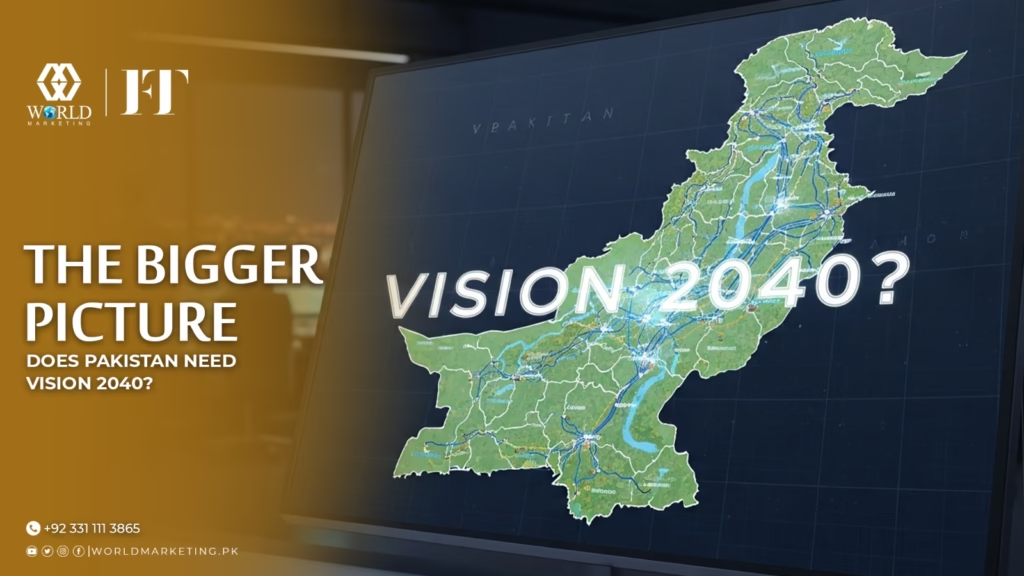
Forget Faisal Town Group for a second. Let’s talk about Pakistan.
Our cities are growing faster than we can manage. Lahore, Karachi, Islamabad, Rawalpindi, they’re all struggling with the same problems. Traffic. Pollution. Overcrowding. Poor infrastructure.
And yet, most development is still reactive. We build housing schemes where land is cheap, not where they make sense. We add roads after traffic becomes unbearable. We build schools after neighborhoods are already full.Vision 2040 flips that logic. It plans first, builds second.Does Pakistan need more developers like this? Absolutely.
Will others follow? That depends on whether Vision 2040 succeeds or fails.
What Can You Do Right Now?
If you’re reading this and thinking, “This sounds interesting, but I’m not sure,” here’s my advice:
Don’t rush. Vision 2040 is a 20-year plan. You don’t need to decide today.
Do your research. Visit existing Faisal Town Group projects. Talk to people who invested with them (when they were Zedem International). Check online reviews. Verify regulatory approvals.
Ask tough questions. If you meet their sales team, don’t just listen to promises. Ask for timelines, ask for proof of progress, ask what happens if things go wrong.
Think long-term. If you’re in your 20s, remember: the property you buy today isn’t just for now. It’s for the person you’ll become in 2030, 2035, 2040.
And if all that checks out? Then maybe Vision 2040 is worth betting on.
Final Thoughts: Strategy or Just Smart Marketing?
So, what is Vision 2040?
Is it a genuine long-term urban development strategy that could reshape how we build cities in Pakistan?Or is it smart marketing designed to make one developer stand out in a crowded market?Honestly? We’ll only know in 5, 10, 15 years. That’s the nature of long-term plans, they take time to prove themselves.
But here’s what I do know: asking the right questions is better than ignoring them. Planning for 2040 is better than stumbling into it. Building communities is better than just selling plots.And if Faisal Town Group can actually pull this off, if they can turn Vision 2040 from a strategy document into a living, breathing reality, then they won’t just change real estate.They’ll change how people live.
Isn’t that worth paying attention to?
Frequently Asked Questions (FAQs)
What is Vision 2040 in Pakistan real estate?
Vision 2040 is Faisal Town Group’s 20-year urban development strategy focused on building sustainable, self-sufficient communities near Islamabad and Rawalpindi with integrated infrastructure, schools, hospitals, and green spaces.
Why did Zedem International change its name to Faisal Town Group?
Zedem International rebranded as Faisal Town Group to reflect its shift from traditional housing development to long-term urban planning and city-building focused on Vision 2040.
What areas does Vision 2040 cover?
Vision 2040 targets strategic growth corridors around Islamabad and Rawalpindi, including locations near major highways and future urban expansion zones like Faisal Town Phase 2.
Is Vision 2040 a good investment for young buyers?
Yes. Vision 2040 focuses on long-term value, sustainable development, and strategic locations, making it suitable for young professionals and first-time investors looking for stable, long-term growth.
How is Vision 2040 different from other housing schemes?
Unlike traditional housing schemes that focus on plot sales, Vision 2040 emphasizes integrated community planning with schools, hospitals, commercial areas, and green spaces built together from the start.
When will Vision 2040 projects be completed?
Vision 2040 is a 20-year strategy extending to 2040, with different phases and projects completing at different times. Specific timelines depend on individual project schedules.
Is Vision 2040 suitable for overseas Pakistanis?
Yes. The long-term, transparent planning approach and focus on reliable development make Vision 2040 attractive for overseas Pakistanis seeking secure investment opportunities in Pakistan.
What makes Vision 2040 sustainable?
Vision 2040 prioritizes green spaces, efficient utilities, proper drainage, waste management, and environmental balance, all planned before development begins rather than added later.