Introduction: The Real Story Behind the Headlines

If you’ve been following real estate developments in Islamabad and Rawalpindi, you’ve likely heard whispers—or maybe even loud claims—about Faisal Town Phase 2 “overselling” plots. Social media posts, WhatsApp groups, and even some news outlets have raised questions about the legitimacy of this massive housing project. The rumors have spread like wildfire, creating panic among investors and potential buyers who’ve poured their hard-earned savings into what they believed would be their dream homes or profitable investments.
But here’s the question every investor should be asking: Do these rumors hold up against the actual facts on the ground? In an era where misinformation spreads faster than truth, it’s crucial to separate emotion from evidence, panic from reality, and social media speculation from verifiable facts. Before we dive into the allegations, let’s establish context. Faisal Town Phase 2 is developed by Chaudhry Abdul Majeed & Sons, the same developer behind successful projects like B-17 Multi Gardens Islamabad and Faisal Hills Islamabad. These projects have delivered thousands of plots to Pakistani families, both local and overseas, establishing a track record that spans over a decade of actual development and possession.
In this comprehensive analysis, we’ll examine the mathematics, the physical development, and the regulatory status of Faisal Town Phase 2 to separate fact from fiction. We’ll look at the actual land bank, count the plots sold versus the capacity, examine on-ground development, and hear from both satisfied and concerned investors. By the end of this investigation, you’ll have the information needed to make an informed decision based on evidence, not emotion.
Understanding “Fraud” vs. “Development Delays”: What’s the Difference?

When someone uses the word “fraud” in real estate, they’re typically referring to developers who take advance payments with no intention of delivering plots, who disappear after collecting funds, or who show no physical development on the ground. This is the critical distinction that gets lost in the noise of social media allegations. Faisal Town Phase 2 doesn’t fit this profile, and understanding why requires us to look at what’s actually happening on the ground versus what constitutes genuine fraud in the real estate sector.
Visit the project site today, and you’ll witness direct connectivity to M-2 Motorway (Lahore-Islamabad Motorway) and proximity to the planned Rawalpindi Ring Road, two infrastructure advantages that alone justify significant investment in the area. You’ll see paved roads spanning kilometers within multiple sectors, underground utilities including water supply, sewerage, and electricity lines, and 24/7 security infrastructure with boundary walls and entrance gates. These aren’t cosmetic improvements or temporary measures designed to deceive investors—these are massive civil engineering projects requiring substantial capital investment, specialized machinery, and ongoing operational expenses.
According to industry estimates, the developer has invested billions of rupees into land acquisition across 70,000+ kanals, heavy machinery and earthwork, infrastructure materials and construction, and professional staff and management systems. The sheer scale of financial commitment raises an obvious question: Would a fraudulent developer invest billions into physical infrastructure for a scam? The answer is obvious to anyone who understands basic business logic. Scammers take money and run—they don’t invest it into concrete, steel, excavators, and underground sewerage systems. They don’t employ hundreds of workers daily or maintain offices with permanent staff. They don’t conduct transparent balloting ceremonies or maintain detailed digital ledgers tracking every file and transaction.
The distinction between fraud and development delays is crucial for investors to understand. Every major housing project in Pakistan’s history has faced delays, regulatory hurdles, and market fluctuations. Bahria Town, DHA, Gulberg, and virtually every other successful project experienced similar challenges during their development phases. What separates legitimate developers from fraudsters isn’t the absence of challenges—it’s the continued investment in overcoming those challenges. When you see active construction, deployed machinery, and completed infrastructure despite market downturns and regulatory delays, you’re witnessing commitment, not deception.
The Land Math: Can 70,000 Kanals Be “Oversold”?
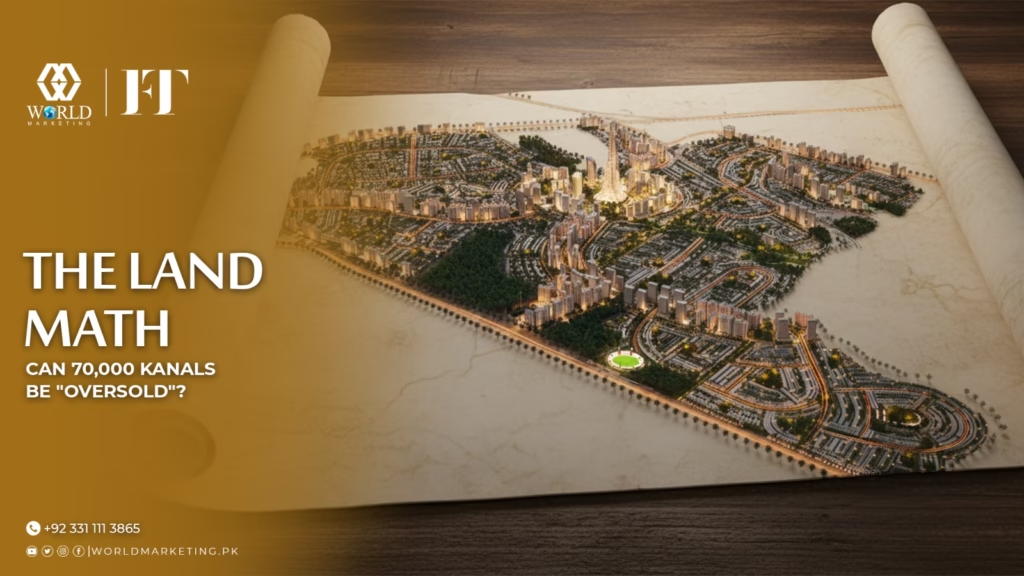
This is where rumors completely fall apart when confronted with basic mathematics. The allegation of “overselling” implies that the developer has sold more plots than the land can physically accommodate, creating a situation where some investors will inevitably be left without actual plots. It’s a serious charge that, if true, would indeed constitute fraud. But does the mathematics support this allegation? Let’s examine the numbers with the same scrutiny we’d apply to any major financial decision.
Faisal Town Phase 2 currently holds acquired land spanning 70,000 to 90,000 kanals, confirmed through multiple sources including developer announcements, field surveys, and investor briefings. The long-term vision includes expansion to 200,000 kanals as the project matures and additional land becomes available for acquisition. But let’s work with the conservative figure of 80,000 kanals for our calculation, assuming the middle range of confirmed acquisitions.
Standard plot sizes in Faisal Town Phase 2 range from 3.5 Marla residential plots to 5 Marla, 7 Marla, 10 Marla residential plots, and 1 Kanal residential and commercial plots. Using the conversion factor of 1 Kanal equals 20 Marlas, we can calculate the theoretical capacity of the land bank. Taking our conservative estimate of 80,000 total kanals and deducting 50% for roads, parks, commercial areas, mosques, schools, and amenities—which is actually a generous deduction as many projects use less than 40% for public spaces—we’re left with 40,000 kanals available for residential plots. This translates to 800,000 Marlas of developable residential land.
If we assume an average plot size of 5 Marla, which is among the most popular sizes in Pakistani housing societies, the project could theoretically accommodate 160,000 plots. Even if we use a more conservative 7-marla average to account for the mix of larger plots, we still arrive at 114,285 plots that could be developed. Now, compare these numbers to the actual sales figures. According to market estimates and booking office data, approximately 15,000 to 25,000 files have been sold across all phases and sectors of Faisal Town Phase 2.
The mathematics speaks for itself. With a capacity of over 100,000 plots and sales of approximately 20,000 files, the utilization rate is less than 20% of total capacity. How can a project with less than 20% utilization be “oversold”? The numbers don’t just contradict the rumors—they make the allegation mathematically impossible unless someone can prove that the land bank doesn’t exist, which would require ignoring the physical boundaries, the development occurring on that land, and the official documentation.
Perhaps the most compelling evidence against overselling allegations is Faisal Town Phase 2‘s digital ledger system that tracks every file number, transfer, and allocation. According to multiple file holders and transfer office reports, there have been zero confirmed cases of duplicate file numbers issued to different buyers—a remarkable achievement in Pakistan’s real estate sector where duplicate files are a common scam tactic used by fraudulent developers. This zero-duplicate record is possible because of computerized tracking systems that prevent the same plot or file number from being assigned to multiple buyers. If overselling were occurring, duplicate files would be the inevitable result, yet no verified case has emerged despite thousands of transactions and transfers over several years.
Rumor vs. Reality: The Overseas Enclave & Sector O Case Study

Recent social media posts have specifically targeted the Overseas Enclave Block and Sector O, claiming these areas are “oversold” or that development is non-existent. These specific allegations provide an excellent case study for examining how rumors develop and spread versus what’s actually happening on the ground. Let’s trace the timeline of events and compare the claims to verifiable facts.
In May 2024, Faisal Town Phase 2 conducted official balloting for thousands of members, a process that assigned actual plot numbers through a transparent computerized system. Winners received specific plot locations, not just file numbers, meaning they now know exactly where their investment sits on the ground. This balloting was conducted publicly with members present, documented through photographs and videos that circulated widely among investor groups. The balloting process itself contradicts overselling allegations because you cannot conduct successful balloting if you’ve sold more plots than exist—the mathematics would immediately expose the fraud when you run out of plot numbers to assign.
On-ground development in Sector O, which is designated as the Model Block for Faisal Town Phase 2, has been progressing at what site visitors describe as “lightning fast” speed throughout 2025 and into 2026. As of February 2026, Sector O is in near-possession stage for early investors, with roads, water supply, electricity poles, and boundary walls already installed and operational. These aren’t cosmetic improvements or mock-ups designed to deceive—these are functional infrastructure elements that serve no purpose unless the developer intends to actually deliver possession to plot holders.
So why do rumors target specific blocks like the Overseas Enclave and Sector O? The answer lies in real estate market psychology and the pattern of how misinformation spreads. Price corrections of 30-40% from peak values trigger panic selling among investors who watch their paper profits evaporate. Panicked investors naturally look for explanations for value loss that absolve them of responsibility for buying at inflated prices during a market bubble. Rumors provide a convenient narrative—”It’s not that I overpaid during the peak, it’s that the project is oversold and fraudulent.” This psychological deflection is human nature, but it doesn’t make the rumors true.
Social media amplifies unverified claims without fact-checking, creating echo chambers where the same rumor gets repeated by dozens of people until it achieves the appearance of truth through repetition. Someone posts “I heard Overseas Enclave is oversold,” another person screenshots it and shares it in a WhatsApp group adding “Multiple people are saying this,” and soon dozens of people are repeating the claim without anyone actually verifying it against the land records, balloting results, or physical development. This is how modern misinformation spreads, and real estate is particularly vulnerable because most investors never visit the actual site to verify claims for themselves.
The reality is that price fluctuations in under-development projects are normal market behavior, not evidence of fraud. Every housing society in Pakistan’s history has experienced price volatility during development, with values declining during construction phases and recovering dramatically once possession begins and NOC approvals are granted. Investors who’ve been through previous projects understand this cycle, but first-time investors often panic at the first sign of price correction, making them susceptible to rumors that confirm their fears.
Regulatory Status: “Under Process” Does Not Mean “Illegal”
One of the most misunderstood aspects fueling overselling rumors is Faisal Town Phase 2‘s regulatory status with the Rawalpindi Development Authority. The project’s current status as “under process” for full NOC approval has been misinterpreted by some investors as evidence of illegality or impending demolition, neither of which reflects reality. Understanding the RDA approval process and what “under process” actually means is crucial for investors to accurately assess risk.
The current “under process” status means the developer has submitted all required documentation to RDA and the authority is conducting its standard verification process, which includes checking land ownership documents, reviewing master plans, verifying environmental assessments, and ensuring compliance with building codes and zoning regulations. This is a normal timeline for mega-projects spanning 70,000+ kanals, as the bureaucratic process of verifying such massive land acquisitions and development plans naturally takes considerable time.
What “under process” does not mean is equally important to understand. It does not mean the project is illegal, as illegal projects are typically issued stop-work orders or demolition notices rather than being allowed to continue development while approvals are pending. It does not mean the project will be demolished, as RDA has shown no indication of such action and continues to process the application through normal channels. And it certainly does not mean investors will lose their money, as the regulatory process is designed to ensure compliance, not to punish developers who are actively working toward meeting requirements.
Historical context provides reassurance for investors worried about regulatory timelines. Bahria Town Rawalpindi took several years to receive complete NOC approvals, operating during much of its development phase under similar “process” status. DHA Islamabad received phased NOC approvals over multiple years, with different sectors gaining approval at different times. Top City-1 operated under development while NOC processes continued, eventually receiving approvals and delivering thousands of plots. The pattern is consistent across Pakistan’s major housing projects—large-scale developments receive NOC approval in phases, not all at once, because the sheer scale of these projects makes simultaneous approval of all sectors impractical.
The regulatory process, while frustrating for investors eager for quick returns, actually serves their interests by ensuring the project meets all legal and technical requirements before final approvals are granted. Projects that rush through approvals or operate completely outside regulatory frameworks are far more likely to face serious legal challenges later. Faisal Town Phase 2‘s engagement with the regulatory process, despite the time it’s taking, demonstrates institutional legitimacy rather than the cowboy approach that characterizes actual scam projects.
Why “Overselling” Allegations Spread: Market Psychology Explained

Understanding why overselling allegations gain traction requires examining the psychology of real estate markets and the specific conditions that make investors susceptible to rumors. The pattern repeats across projects and markets, and recognizing it helps investors maintain perspective during turbulent times.
The market corrections of 2025-2026 set the stage for panic and rumor-mongering. Faisal Town Phase 2 prices peaked in 2023-2024 when the overall Pakistani real estate market was experiencing a boom fueled by inflation hedging and overseas Pakistani investment. Prices then corrected 30-40% due to overall market slowdown triggered by economic uncertainty, reduced overseas remittances, and tighter liquidity conditions. Investors experiencing losses on paper naturally sought explanations for why their investments had declined in value.
Liquidity concerns compounded the anxiety. A slower resale market made investors nervous as they found fewer buyers willing to purchase files at even the corrected prices. Reduced buying activity created a perception of fundamental problems with the project rather than recognition that the entire market was experiencing the same slowdown. Panic selling began as some investors decided to exit at losses rather than wait for market recovery, and this selling pressure further depressed prices, creating a self-reinforcing cycle of declining values and increasing fear.
Into this atmosphere of fear and uncertainty, rumors found fertile ground. Some rival projects deliberately spread negative rumors about Faisal Town Phase 2 to redirect investors toward competing schemes, a common but unethical practice in Pakistani real estate. Investors already nervous about their declining values proved receptive to any explanation that justified their fears. Temporary NOC delays, which are normal in major projects, were reinterpreted as evidence of fundamental illegitimacy rather than bureaucratic slowness.
Senior real estate analysts in Rawalpindi observe a consistent pattern that should give pause to rumor-spreaders and panic sellers alike. Overselling allegations typically peak just before a major development milestone or NOC approval, creating maximum fear precisely when staying invested would be most profitable. Once approvals are granted and development accelerates, the same investors who spread panic end up regretting their emotional decisions as prices recover and exceed previous peaks. This pattern has repeated across B-17, Bahria Town, DHA, and now appears to be repeating in Faisal Town Phase 2.
The psychological pattern is predictable: investors buy during euphoria when prices are high, panic during corrections when prices are low, sell at losses to escape their anxiety, and then watch in frustration as the market recovers without them. The investors who profit most consistently are those who do their homework during the panic phase, verify the fundamentals of the project, and maintain positions through market cycles rather than making emotional decisions based on social media rumors.
The Developer’s Track Record: History of Delivery
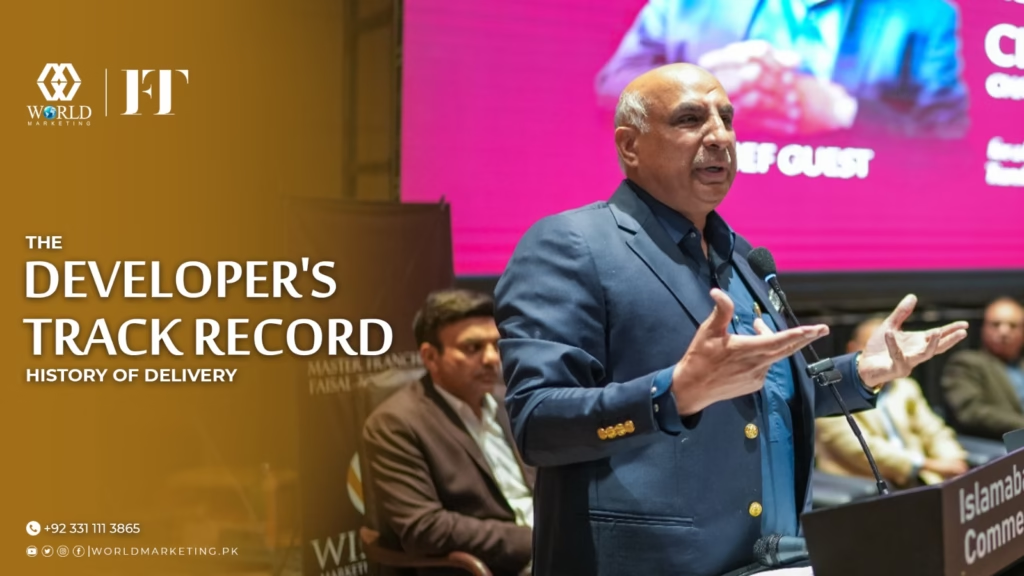
Before making investment decisions based on rumors, prudent investors examine the developer’s history to understand whether past behavior suggests capability and integrity or pattern of fraud and abandonment. Chaudhry Abdul Majeed & Sons’ portfolio provides clear evidence of their approach to real estate development.
B-17 Multi Gardens Islamabad stands as the developer’s flagship achievement and provides the best template for understanding how Faisal Town Phase 2 is likely to evolve. B-17 is now fully developed and delivered, with thousands of families living in possession, all infrastructure completed including roads, utilities, parks, and commercial areas, and current market value reflecting its status as a premium location in Islamabad. But B-17‘s success didn’t happen overnight, and the project faced many of the same challenges now confronting Faisal Town Phase 2.
During B-17’s development phase, investors experienced similar price volatility, regulatory delays, and even some of the same overselling rumors that now circulate about Faisal Town Phase 2. Yet the developer continued investing in infrastructure, completing development sector by sector, and ultimately delivering on commitments made to thousands of file holders. The investors who maintained their positions through B-17‘s development phase saw significant appreciation once possession began, while those who sold during panic phases missed out on substantial gains.
Faisal Hills Islamabad, another project in the developer’s portfolio, currently has major sectors in possession phase with roads, electricity, and water supply operational, and schools and commercial areas functional. Like B-17 before it, Faisal Hills is transitioning from under-development project to mature housing society, following the same pattern of gradual sector-by-sector completion that characterizes the developer’s approach.
This track record raises a critical question: Why would a developer with successful completion of B-17 and ongoing successful development of Faisal Hills suddenly commit fraud with Faisal Town Phase 2? The financial and reputational risk would be catastrophic. The developer has built a brand over more than a decade, established relationships with thousands of satisfied customers, and created ongoing revenue streams from commercial properties in completed projects. Throwing all of this away for short-term gains from an overselling scam makes no business sense whatsoever.
The pattern suggests a developer who takes on ambitious projects, delivers them gradually over several years while managing the inevitable challenges that arise, and ultimately fulfills commitments to investors. This is not the pattern of a scammer looking for quick money before disappearing. Scammers don’t invest billions into infrastructure, don’t maintain multiple ongoing projects simultaneously, and don’t stick around for a decade building reputation in the market.
On-Site Evidence: What Visitors Report in 2026
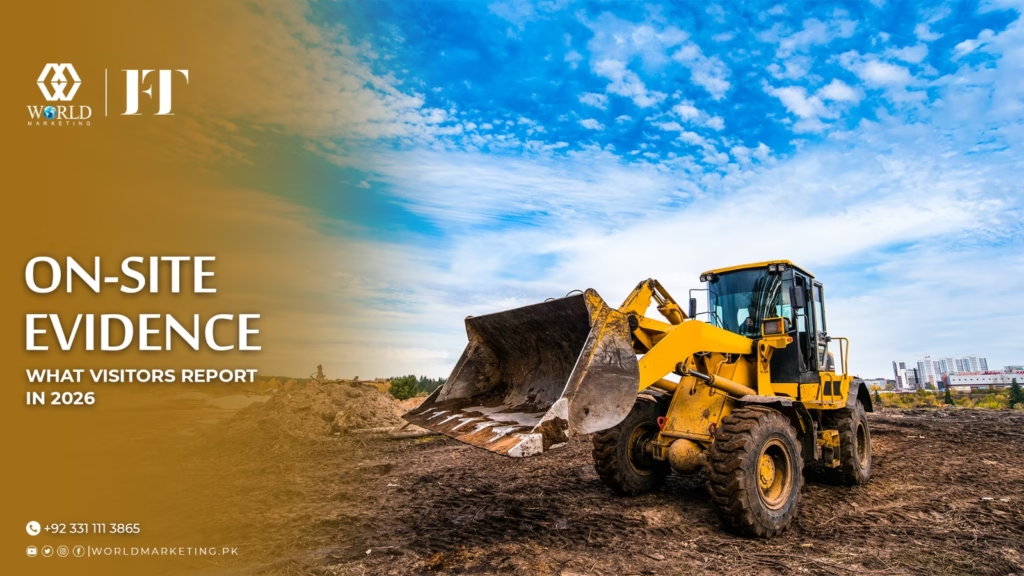
While social media rumors spread based on hearsay and speculation, investors who actually visit Faisal Town Phase 2’s site report a very different reality. Recent site visits from January through February 2026 provide ground-level perspective on actual development progress versus the claims circulating online.
In Sectors A, B, and C, which are designated for residential development, visitors report seeing the main boulevard at 120 feet wide and fully paved with quality asphalt, internal roads ranging from 40 to 60 feet currently under construction with base layers completed, boundary walls completed along major sections providing security and clear demarcation, and water supply infrastructure with underground tanks installed and distribution lines being laid. This infrastructure represents millions of rupees in investment per sector and serves no purpose if the developer doesn’t intend to deliver actual plots to actual people.
Sector O, positioned as the Model Block for the entire project, shows development status at approximately 80-90% completion as of early 2026. Visitors document electricity poles and transformers installed throughout the sector, an underground sewerage system that is operational and ready for connection, and a possession timeline projected for Q2 2026 between April and June. The speed of development in Sector O is particularly notable, as the developer appears to be prioritizing this sector’s completion to demonstrate capability and provide early possession to investors, which would effectively silence overselling rumors through the most convincing evidence possible—actual plot handover.
Commercial areas within the project show main commercial market plots clearly demarcated with corner stones and survey markings, access roads under rapid construction connecting commercial zones to residential sectors, and utilities connection points established and ready for hookup once commercial development begins. The commercial infrastructure is particularly significant because it represents long-term revenue for the developer through rental and sale of commercial plots, providing strong financial incentive to complete the project rather than abandon it.
Field reports document heavy machinery deployed across the project site, including 15-20 excavators actively working on different sectors, 8-10 graders leveling roads and preparing land, 20+ water tankers supporting road construction and dust suppression, and an estimated labor force of 500+ workers daily across all active sectors. The total estimated machinery investment exceeds 500 million rupees, a staggering sum that fraud-minded developers simply don’t deploy.
This raises perhaps the most obvious question for those promoting overselling rumors: Would a “scam” project deploy this level of machinery, labor, and active construction? Scammers minimize costs to maximize profits from the scam. They don’t invest hundreds of millions in machinery. They don’t maintain hundreds of workers on daily payroll. They don’t build kilometers of roads and underground utilities. The on-ground evidence directly contradicts the social media narrative, which explains why rumor-spreaders rarely if ever visit the actual site to verify their claims.
Investor Testimonials: Both Sides of the Story

A balanced assessment of Faisal Town Phase 2 requires hearing from investors on both sides—those satisfied with their investment and those expressing concerns. Both perspectives provide valuable insights into the reality of investing in under-development projects.
Muhammad Arshad, an overseas investor from the United Kingdom, visited the site in December 2025 and reported that the development is real and impressive, with his 10-marla plot in Sector C clearly marked with corner stones and survey numbers. He acknowledges that prices have dropped from their peak, causing paper losses on his investment, but attributes this to market-wide conditions affecting all Pakistani real estate rather than Faisal Town-specific issues. His visit to the ground gave him confidence to maintain his position rather than panic sell based on social media rumors.
Sana Malik, a local investor from Rawalpindi, participated in the May 2024 balloting and received her specific plot number through the transparent computerized system. She reports that development in Sector O is visible to anyone who takes the time to visit the actual site rather than relying on WhatsApp forwards and Facebook posts. Her perspective is that rumors are primarily spread by people who never visited the ground and who make investment decisions based purely on speculation and emotion.
Ahmed Hassan represents the concerned investor perspective, expressing worry about NOC delays and frustration with the price drop that has hurt his investment’s value. He hopes the developer will provide more frequent updates and clarifications about regulatory status to ease investor anxiety. However, even Ahmed’s concerns don’t include allegations of duplicate files or non-existent land—the hallmarks of actual fraud—but rather focus on timing and communication issues.
This pattern in investor testimonials is revealing. Even the concerned and anxious investors aren’t reporting the specific red flags that would indicate genuine fraud. No one reports discovering their plot number was assigned to someone else. No one reports being unable to verify their file in the developer’s records. No one reports finding that the land supposedly containing their plot doesn’t actually exist. The concerns center on timing, market conditions, and regulatory processes—legitimate issues worthy of attention, but fundamentally different from fraud allegations.
The satisfied investors share common characteristics worth noting. They tend to have visited the site personally rather than relying solely on social media information. They understand real estate market cycles and have realistic expectations about development timelines. They often have experience with previous projects and recognize that what Faisal Town Phase 2 is experiencing matches the normal pattern of major housing societies during development phases. Their satisfaction doesn’t mean they’re unaware of challenges or delays, but rather that they’ve contextualized those challenges within the broader reality of Pakistani real estate development.
Red Flags vs. Green Flags: A Balanced Assessment
Responsible analysis requires acknowledging both the concerns and the positive indicators surrounding Faisal Town Phase 2. Investors deserve honest assessment of potential risks alongside the evidence contradicting fraud allegations.
Potential red flags that warrant monitoring include the NOC status, which remains “under process” with RDA and requires continued attention to ensure progress toward approval. This regulatory uncertainty creates risk that timelines may extend or unexpected requirements may emerge. Price volatility representing 30-40% corrections from peak may continue if the broader Pakistani real estate market remains slow, particularly if economic conditions don’t improve or if overseas Pakistani investment continues to decline. Possession timelines may extend beyond initial estimates, a common occurrence in mega-projects where regulatory approvals, utility connections, and final infrastructure completion often take longer than initially projected.
These red flags are real and deserve consideration, but they’re also typical of large-scale real estate development in Pakistan. Every major housing society has faced similar challenges. The question isn’t whether challenges exist, but whether the developer is actively working to overcome them, which brings us to the green flags.
Strong green flags that provide confidence include the developer’s proven track record with successful delivery of B-17 Multi Gardens and ongoing successful development of Faisal Hills. Developers with this history don’t suddenly become fraudsters because the patterns of behavior, institutional knowledge, and stakeholder relationships they’ve built would all be destroyed. Physical development representing billions invested in visible infrastructure that serves no purpose if the project is a scam is perhaps the most compelling evidence. Machinery doesn’t lie, roads don’t lie, and underground utilities don’t lie.
The land bank of 70,000+ kanals confirmed through multiple sources including developer documentation, independent surveys, and physical site boundaries creates mathematical impossibility for overselling given the relatively modest sales volumes. The zero duplicate files record maintained through digital tracking systems demonstrates operational integrity and prevents the most common form of real estate fraud in Pakistan. Transparent balloting completed successfully in May 2024 with assignment of actual plot numbers contradicts claims that plots don’t exist or are oversold.
On-ground progress in Sector O nearing possession stage for early investors provides tangible evidence of development trajectory and suggests that possession will begin in coming months, which would effectively end overselling speculation through the most convincing proof possible. Heavy machinery continuously deployed across active construction sites represents ongoing financial commitment that fraudulent developers would never make.
The risk assessment is straightforward: Like any under-development project, Faisal Town Phase 2 carries investment risk related to timing, regulatory approvals, and market conditions. However, the evidence strongly contradicts allegations of overselling or fraud. The risks investors face are development risks, not fraud risks, and that distinction is crucial for making informed decisions.
What Should Investors Do? Practical Recommendations

Based on this comprehensive analysis, here are specific recommendations for different investor groups to navigate the current situation effectively.
For current file holders, the most important action is to visit the site personally rather than relying solely on social media posts or secondhand information. Document development with photos and videos that you can reference later to track progress. Visit during working hours to see active construction and verify that machinery and workers are actually deployed. This personal verification is worth far more than a hundred WhatsApp forwards because you’ll see the reality with your own eyes.
Verify your file status by contacting the official transfer office and confirming that your file number appears in the digital ledger without any disputes or issues. Request updated plot location information reflecting post-balloting assignments so you know exactly where your investment sits on the ground. This verification process takes minimal time but provides maximum peace of mind.
Hold for long-term rather than making emotional decisions based on short-term price fluctuations. Real estate in Pakistan rewards patience, with the biggest gains going to investors who maintain positions through development phases and benefit from the value appreciation that occurs once possession begins and societies mature. Short-term volatility is normal and even predictable in major projects. Major projects take five to seven years to fully mature from launch to complete possession, meaning investors should enter with realistic timeline expectations.
Stay informed through official channels rather than social media speculation. Follow official Faisal Town Phase 2 announcements released through verified developer communications. Ignore unverified WhatsApp forwards that often contain outdated information, deliberate misinformation from competitors, or simple misunderstandings that get amplified through repetition. Attend official briefings if offered, as these provide opportunities to ask questions directly and receive documented answers.
For potential investors considering entering Faisal Town Phase 2 at current corrected prices, thorough research is essential. Read comprehensive analyses like this one but also verify facts independently through site visits, file verification, and consultation with experienced real estate professionals. Compare Faisal Town Phase 2 with other housing societies in the region to understand relative pricing, development progress, and market positioning. Check the developer’s track record thoroughly by visiting B-17 and Faisal Hills to see completed and near-complete projects.
Assess your risk tolerance honestly. Under-development projects carry higher risk than possession-ready societies but also offer higher potential returns. NOC approval, when it comes, will likely boost prices 30-50% or more based on patterns observed in similar projects. Timeline to possession is realistically two to four years for most sectors, meaning your capital will be locked during this period. Only invest funds you can afford to have illiquid for this timeframe.
Diversify your investment portfolio rather than concentrating all resources in one project. Balance between developed and under-development projects to manage risk while maintaining upside potential. Consider opportunities in both Islamabad and Rawalpindi to benefit from development in both cities.
For skeptics and critics who remain unconvinced despite the evidence presented, the challenge is simple: present evidence, not emotions. If you have proof of duplicate files being issued, present it publicly with documentation. If you have evidence of non-existent land or falsified boundaries, document it with surveys and coordinates. Unsubstantiated claims help no one and create unnecessary panic that harms legitimate investors.
Understand market dynamics that create the appearance of problems where none exist. Price corrections don’t equal fraud but rather reflect normal market cycles. NOC delays don’t equal scam but represent the typical bureaucratic timeline for mega-projects. Development timelines extend in all major projects due to the complexity of coordinating multiple aspects of infrastructure, utilities, and regulatory approvals.
Conclusion: The Verdict on Overselling Allegations
After examining the land mathematics, on-ground development, developer track record, investor testimonials, and regulatory context, we reach a clear evidence-based conclusion. The allegations that Faisal Town Phase 2 has oversold plots are unsubstantiated when measured against verifiable facts.
The mathematical impossibility of overselling given the land capacity is perhaps the most straightforward evidence. When you have 70,000 to 90,000 kanals that can support over 100,000 plots and you’ve sold only 15,000 to 25,000 files representing less than 20% of capacity, the numbers simply don’t support overselling claims. This isn’t subjective interpretation or optimistic projection—it’s basic arithmetic that anyone can verify.
The zero duplicate files record maintained through digital ledger systems demonstrates operational integrity and contradicts the most common evidence of actual overselling, which would inevitably produce duplicate file numbers if more plots were sold than existed. The absence of verified duplicate file cases despite years of operations and thousands of transactions speaks volumes.
Physical development representing billions of rupees invested in visible infrastructure, heavy machinery, and ongoing construction makes no sense if this were a scam. Fraudsters minimize costs to maximize profits from the fraud. They don’t invest hundreds of millions in roads, underground utilities, boundary walls, and active construction across multiple sectors. The machinery on the ground and the infrastructure under construction represent proof of intent to deliver that no amount of social media speculation can overcome.
The developer’s history of successfully delivering B-17 and developing Faisal Hills provides context for understanding their approach and capability. Developers don’t build decade-long reputations by completing thousands of plots in previous projects only to suddenly commit fraud. The reputational and financial risk would be catastrophic, destroying the brand equity they’ve spent years building.
The real issues facing Faisal Town Phase 2 don’t equal fraud but rather represent normal development challenges. NOC timeline is longer than initially hoped, which is normal for mega-projects navigating bureaucratic processes. Market correction of 30-40% in prices reflects market-wide phenomena affecting all Pakistani real estate, not Faisal Town-specific problems. Possession delays with extended timelines are common in large developments where coordinating all aspects of infrastructure, utilities, and regulatory compliance takes longer than optimistic initial projections.
These are development challenges, not evidence of scam. The distinction is crucial because development challenges can be overcome through continued investment and effort, which is exactly what the evidence shows happening. Scams can’t be overcome because there’s no genuine project behind them—only the appearance of one designed to extract money before disappearing.
The final advice for investors is straightforward: trust the evidence on the ground, not the panic on social media. Visit the site with your own eyes and see the active construction, deployed machinery, and completed infrastructure. Look at what exists physically, not what people claim in WhatsApp groups. Examine the developer’s track record of actual completed projects, not speculation about current ones. Review the land mathematics that make overselling mathematically impossible given sales volumes. Make decisions based on facts, not fear, and certainly not on unverified rumors that fall apart under scrutiny.
Real estate investment always carries risk, and Faisal Town Phase 2 is no exception. But the difference between calculated risk and fraud is enormous. The evidence overwhelmingly supports the former, not the latter. Investors who understand this distinction, who do their homework, who verify facts independently, and who maintain realistic expectations about development timelines are positioned to benefit from Faisal Town Phase 2’s eventual maturation. Those who panic based on social media rumors and sell during market corrections are likely to regret their emotional decisions when development completes and prices recover, just as happened with B-17 and every other major housing society that faced similar rumors during development.
The choice facing investors is whether to trust mathematics, physical evidence, developer track record, and on-ground verification, or to trust social media rumors that contradict all of these. The evidence points clearly in one direction, and investors who follow the evidence rather than the emotion will likely be glad they did.
Common Questions People Ask
Q: Is Faisal Town Phase 2 approved by RDA?
A: It’s currently “under process” for full approval. This is normal for big projects. It doesn’t mean illegal.
Q: How many plots can 70,000 kanals hold?
A: More than 100,000 plots. They’ve only sold about 20,000 files. So there’s plenty of space.
Q: Did anyone get duplicate file numbers?
A: No. Zero cases reported. The computer system prevents this.
Q: When will Sector O be ready?
A: Expected between April-June 2026 based on current construction speed.
Q: Should I sell my file because of rumors?
A: Only if you need money urgently. Panic selling during price drops usually leads to regret later.
Q: How is this different from B-17?
A: Same developer. Faisal Town Phase 2 is bigger and has better location (M-2 Motorway access).
Q: What plot size is best to buy?
A: 5-marla and 10-marla plots usually sell fastest and gain value best.
Q: Will prices go back up?
A: History shows prices recover after possession starts and NOC is granted. But timing depends on overall market conditions.